1. Customer and industry
The best company is not always the chosen one, often, the chosen one is the one that has been able to make visible the value that makes it different.
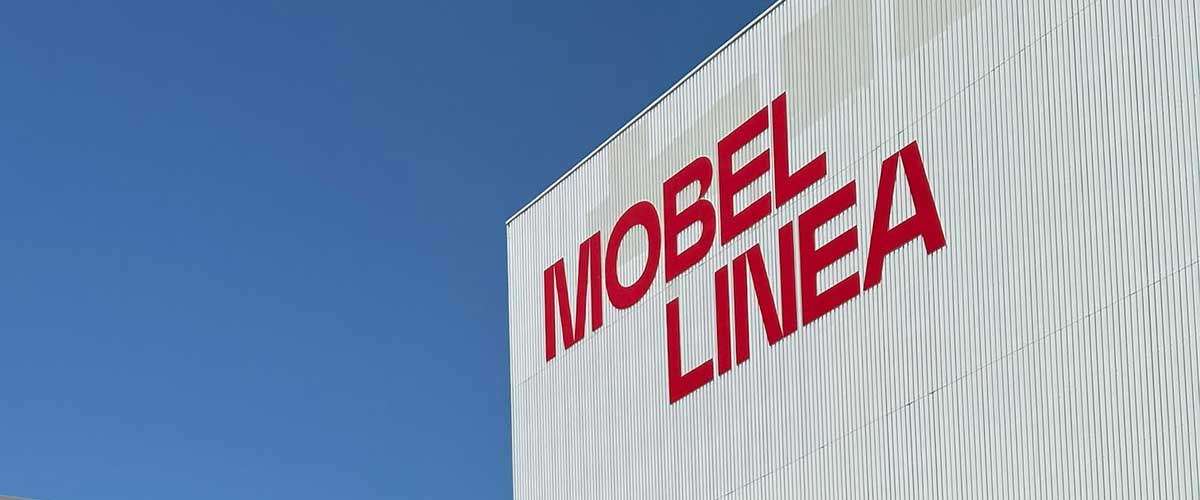
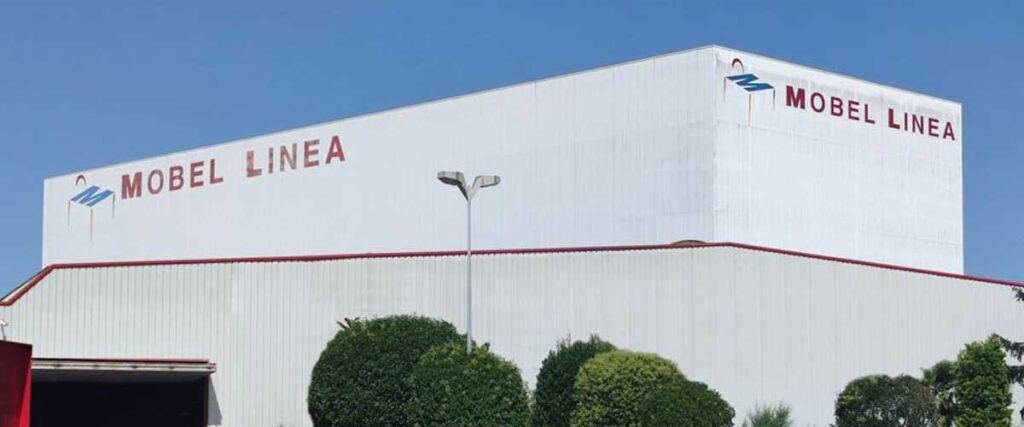
Mobel Línea is a family business born in 1976 in Cervera, in the heart of La Segarra, specialising in the design and manufacture of furniture for offices and workplaces. Its industrial background, its knowledge of the trade and its manufacturing capacity gave it a very solid foundation. The challenge was to turn its 50 years of experience into a brand idea capable of being perceived, remembered and chosen.
2. Context of the problem
The office furniture industry had been shifting its discourse from the traditional office to workspaces for years. It was a logical evolution: companies wanted to attract talent, improve well-being and respond to new ways of working, but that evolution had generated a new uniformity. Many brands spoke of spaces, solutions and well-being in very similar language.
When an entire sector uses the same words, the real difference is buried under a homogeneous discourse.
Mobel Línea had a trade, industrial capacity and his own way of understanding work. He needed a broader framework to make that value visible.
3. Voltage Detected
The tension wasn't between an old logo and a new one, it was in the mental category from which the brand was explained.
Talking about spaces placed Mobel Línea in the same conversation as its competitors. The company's job is to create the right conditions for people to work, collaborate and live better in their professional environment. That dimension was much richer than the word space.
4. DLAB Diagnosis
Analyzing the company, we understood that it had been doing something for decades that it still did not explain. Its way of manufacturing responded to the same logic with which it understood the company: to continuously use, transform, reconfigure and evolve the available resources. Nothing is wasted. Everything finds a new function. Manufacturing is the visible expression of a particular way of understanding the business. It was then that we understood that talking about spaces was insufficient. A space is something passive; an environment, on the other hand, is a living system where people, objects, relationships and emotions interact and evolve.
The strategy consisted of making visible that way of thinking and acting that the company has been building for fifty years.
5. Strategic decision
We built the entire repositioning around a single idea: Creem Entorns.
A claim that, in two words, condenses the company's culture.
The concept made it possible to explain the furniture, but also the ability to adapt, the vision of the future and the will to build environments where people could develop better.
Management understood the change as a natural evolution of its legacy. Preserving the essence of a brand requires finding the language capable of expressing it more precisely.
From that moment on, everything began to be ordered in a coherent and consistent way.
6. Verbal, visual or perceptual result
The brand began to express the impact that an environment has on people. The change, in addition to being verbal, was perceptive.
Mobel Línea went from occupying a common territory to building its own vision: creating environments that influence the way of working and living work.
The industrial experience went from being a historical fact to becoming an authority.
7. Materialization of the strategy
The visual identity, the narrative, the web, social media, the catalogs, the manuals, the vehicles, and all the touchpoints started to speak the same language. However, we were missing something.
From this concern the tangram was born. Its function went beyond being a commemorative object of the 50th anniversary. It was the physical representation of the company's philosophy, the business culture turned into an object. An element that also served as a bridge between the physical and digital worlds.
By encouraging contests and games on the networks by creating different environments, we achieved greater visibility, more interaction and a closer emotional bond.
Made with materials linked to the industrial activity itself, it summarises modularity, configuration, evolution, reuse, permanence, history and the ability to create infinite environments from the same elements.
Just as in the factory, where each resource finds a new use, the pieces of the tangram can be continually rearranged.
8. Learning from the case
When an entire industry uses the same words, to differentiate yourself you must find a different way to explain what you already are.
Mobel Línea needed to discover that its biggest differentiator, in addition to the products it manufactured, was the way it understood work, industry, and the future of work environments.
On many occasions the best brands are not invented. They are discovered. They become visible.
It is then that they stop explaining themselves to begin to demonstrate themselves.
9. Internal links to related services
Strategic positioning · Brand platform · Brand narrative · Visual identity · Graphic system · Brand Book · Creative direction · Corporate communication · Brand activation · Brand anniversary