Sometimes a project seems to ask for images.
But before looking for them, we must know what we are trying to see.
Customer and sector
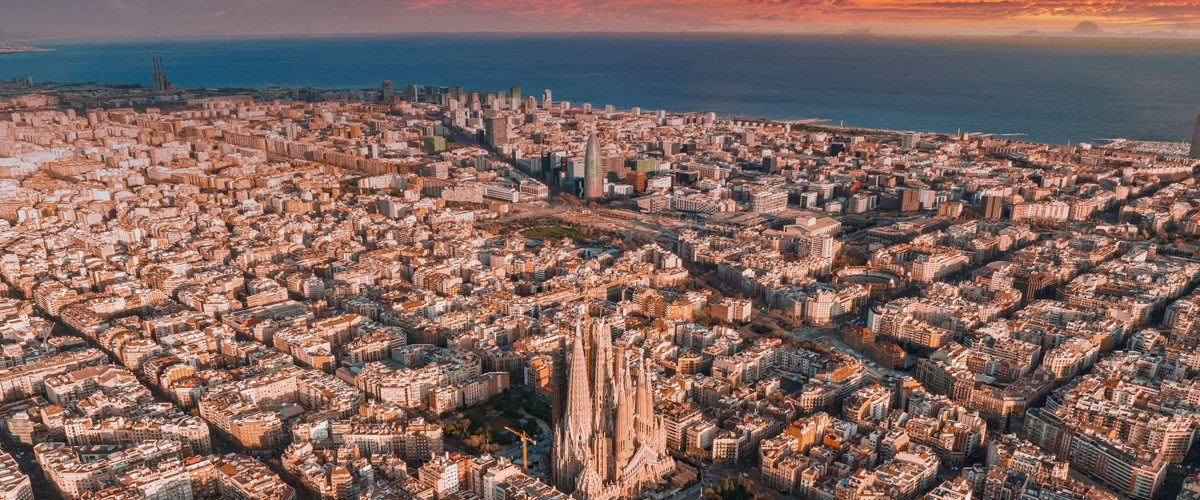
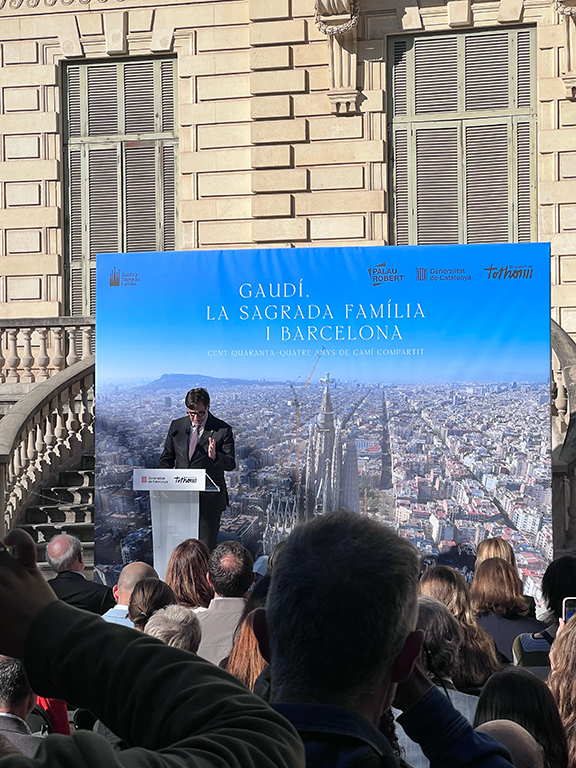
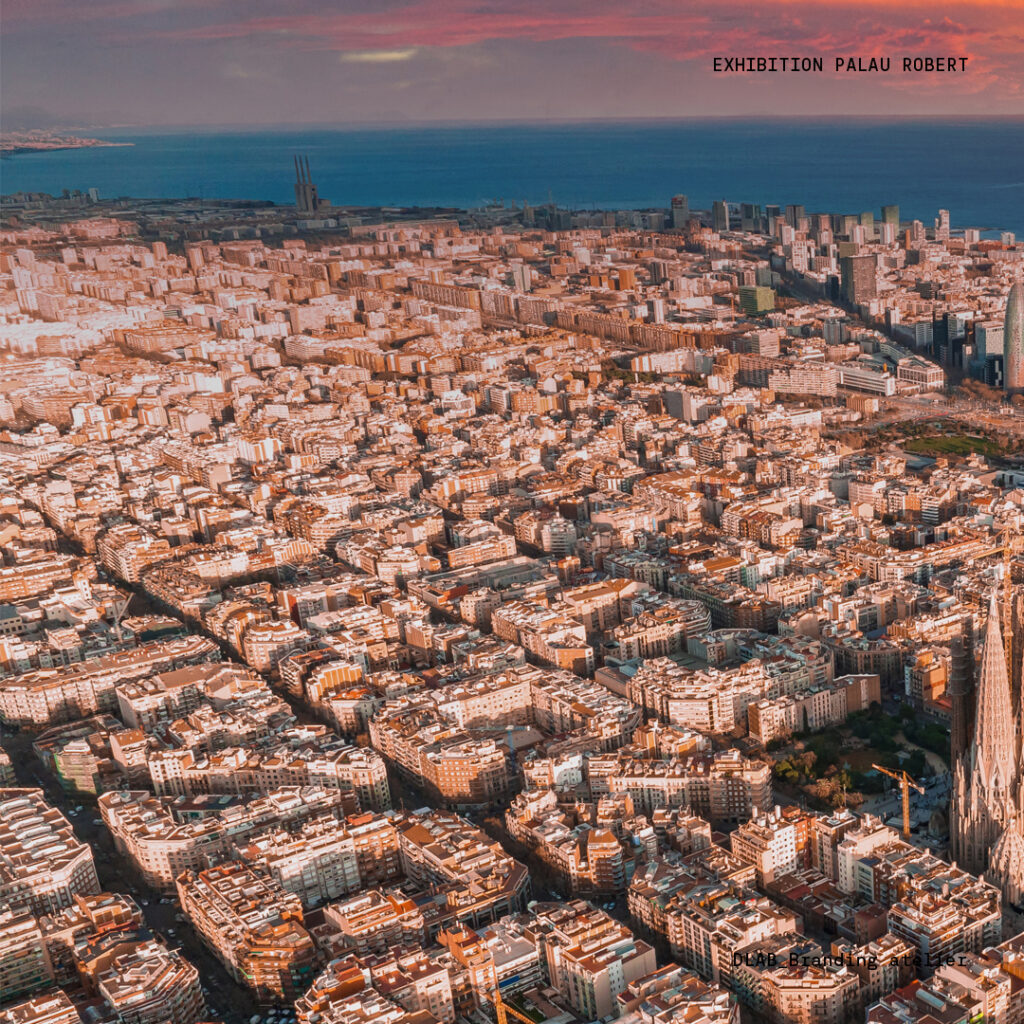
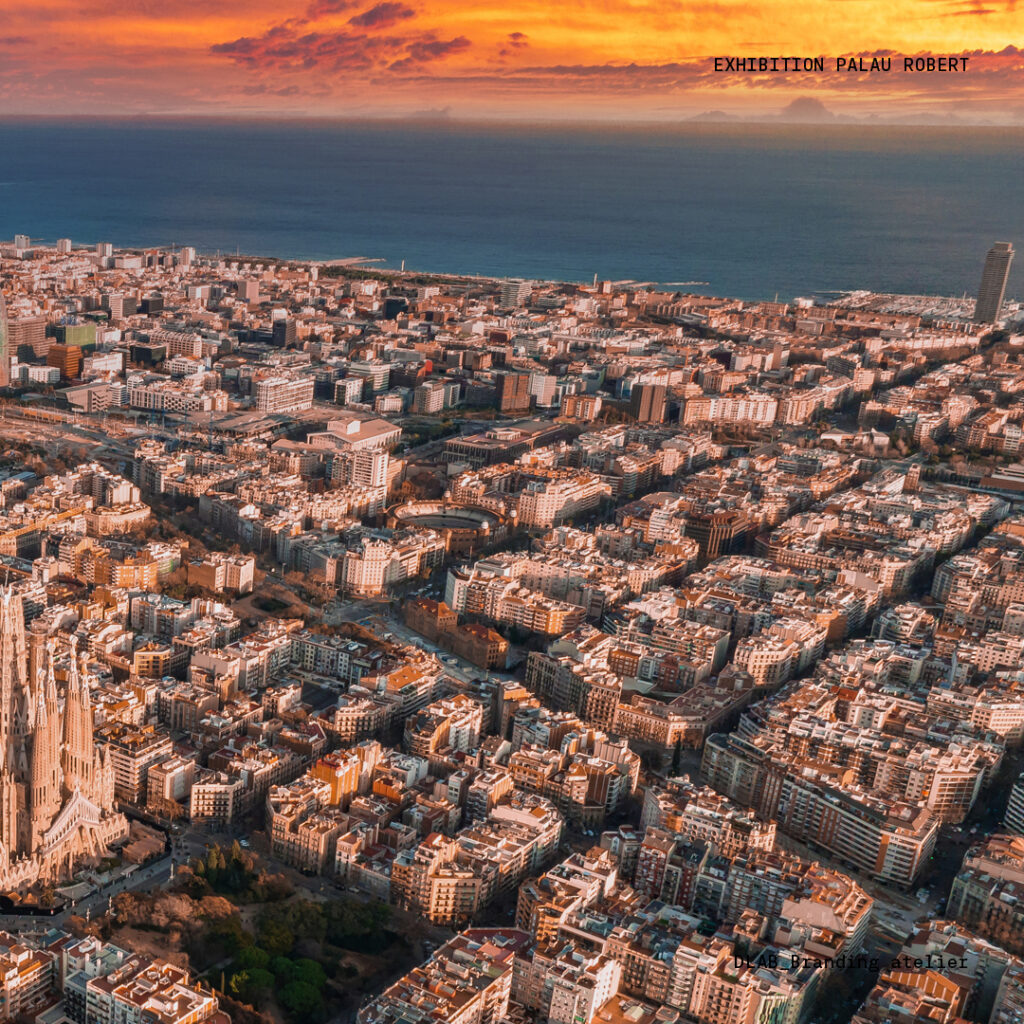
The Sagrada Família and Barcelona have been transforming together for almost a century and a half.
Since the construction of the temple began, the city has seen fields disappear, streets opened, the Eixample grow, the tram and metro arrive and the buildings, vehicles and the way public space is occupied.
Wars, social and urban transformations, historical events and entire generations of Barcelonans have happened while its towers continued to rise.
They were not two parallel stories.
The Sagrada Família and Barcelona had grown together.
Background
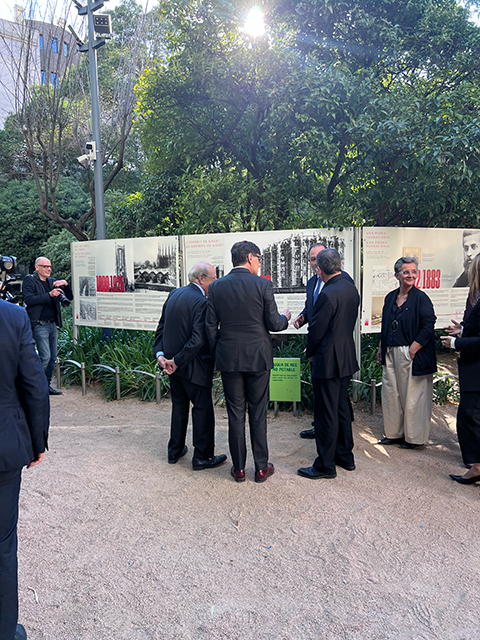
The commission was to create a photographic exhibition capable of tracing the evolution of the Sagrada Família from its origins to the present day.
On paper, it seemed simple: look for images of the temple, order them chronologically, and show how it had changed over nearly a century and a half.
That would have been the right answer.
But incomplete.
Because while the Sagrada Família grew, something else was growing around it.
Barcelona.
Tension
Before looking for photographs and materials, one question had to be asked:
Can you explain the history of the Sagrada Família without explaining the history of Barcelona?
A retrospective focused solely on the temple would have shown its architectural evolution. But it would have left out everything that allowed us to understand the real meaning of the passage of time.
The challenge wasn't just about documenting how a building had changed.
It consisted of explaining the relationship between two protagonists who had been transforming each other for 144 years.
Diagnosis
The Sagrada Família has not grown in Barcelona.
He has grown up with Barcelona.
That small change of preposition changed our way of approaching the whole exhibition.
We were no longer looking only for images capable of documenting the architectural evolution of the temple.
We were looking for images capable of explaining a relationship of 144 years.
Two protagonists.
Same time.
A shared path.
There is a ceiling that sums up this diagnosis particularly well.
It is the first.
And the Sagrada Família still does not appear in it.
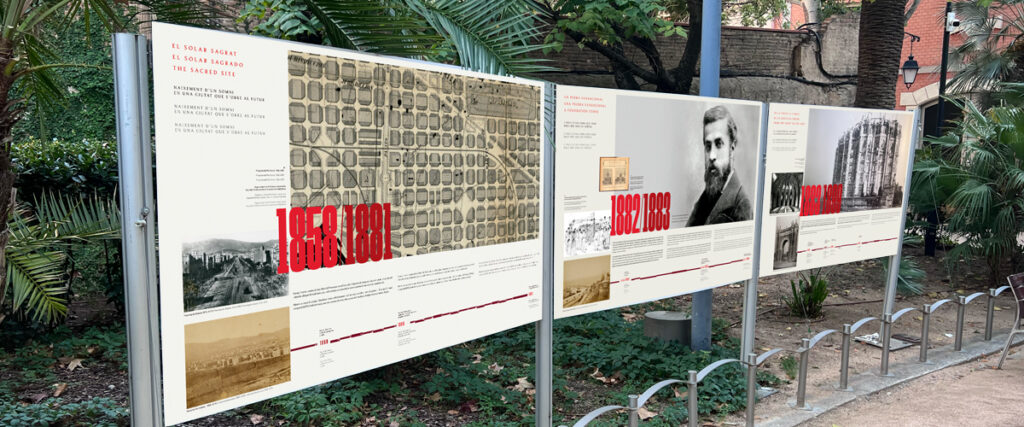
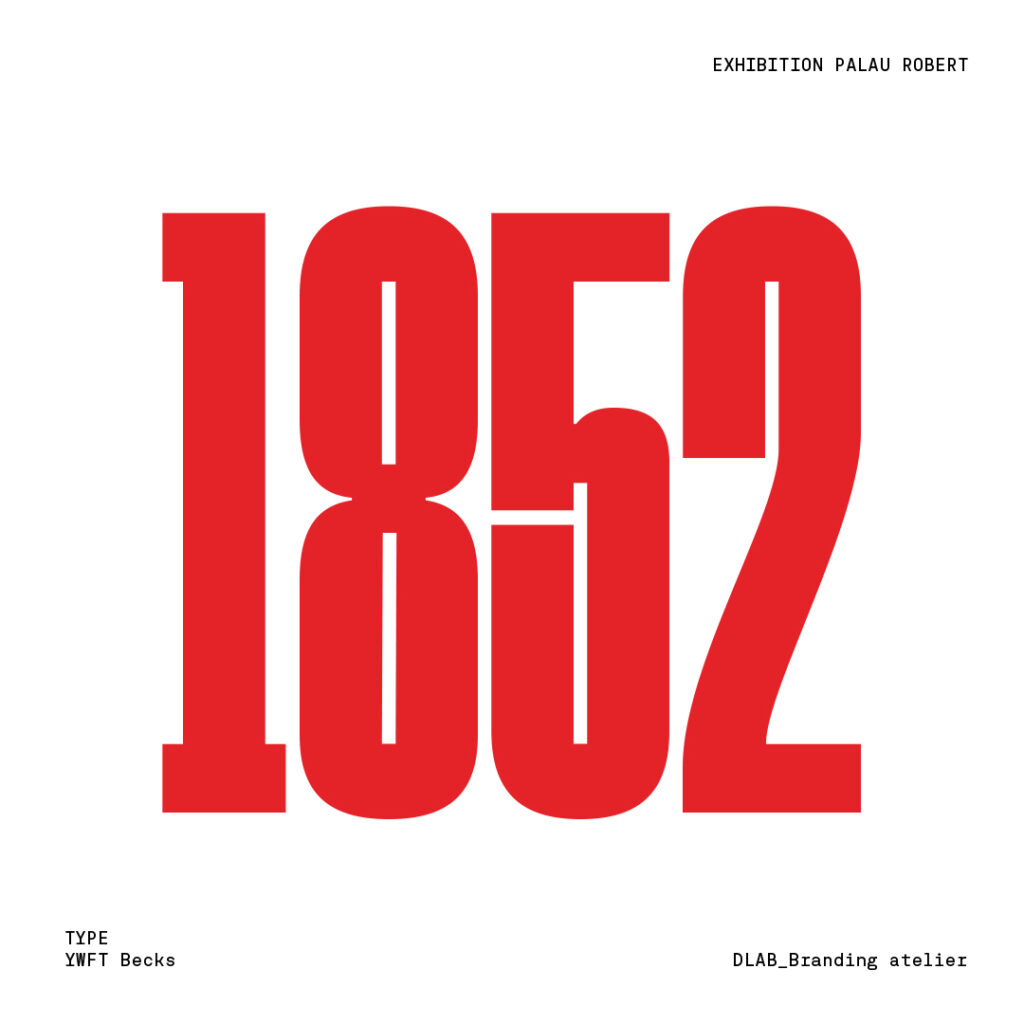
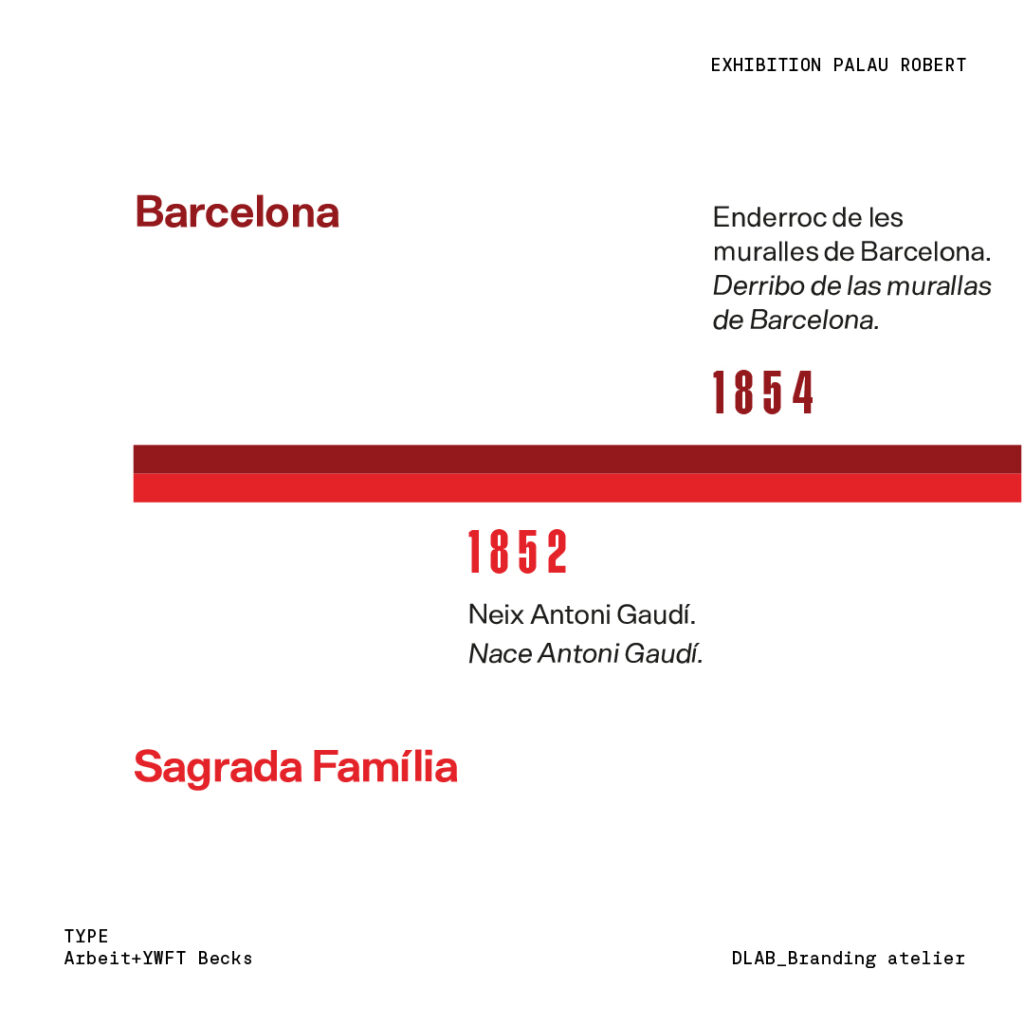
The story begins between 1852 and 1881. Barcelona has just demolished its walls and the Pla Cerdà begins to draw a city that does not yet exist. The site where the temple stands today was destined, in the initial plan of the Eixample, to a large racecourse.
The temple is not yet there.
But the city that will allow us to understand its history is already transforming.
To tell the origin of the Sagrada Família we had to start by telling Barcelona.
External links:
Sagrada Família press release, Europa Press release, Barcelona City Council press release, Sàpiens ressenya Magazine, El Periódico article, El País article.
Strategic decision
The research led us to the Photographic Archive of Barcelona, the National Archive of Catalonia, the Gaudí Chair, the Fundació Institut Amatller d'Art Hispànic, the Municipal Archive of Barcelona and the archive of the Hospital de Sant Pau.
Hundreds of photographs.
But accumulating images was never the goal.
We had to know what we were looking for.
We initially work from two perspectives.
The first one looked at the temple: photographs close enough to appreciate its architectural evolution, but open enough to also understand how the streets and buildings around it were transformed.
The second shifted the gaze to Barcelona: what was happening in the city while the temple continued to grow.
During the investigation, a third look appeared.
People.
How do you show 144 years?
Architecture allows comparison.
People allow us to understand.
Some of the photographs that best explained the passage of time were not necessarily those where the Sagrada Família had the greatest prominence.
They were those where there was life.
People walking. Trams. Crowds. Celebrations. Everyday scenes. Ways of dressing, moving and occupying space that today belong to another time.
Because to explain 144 years it was not enough to show how the buildings had changed.
It was necessary to show how life had changed.
Verbal, visual and perceptual results
How do you show 144 years?
The research made it possible to construct a story in which the temple ceased to appear as an isolated piece of the city.
The exhibition went on to explain a shared path between architecture, urban transformation and everyday life.
Reviewing hundreds of historical photographs also produced a less anticipated discovery.
Seen in sequence, Barcelona looks like a city that sheds its skin from time to time.
The streets, buildings, transport, shops and people change. Even the way of relating to space changes.
There is a constant desire for transformation, modernity and progress in Barcelona.
But each new layer also leaves something behind.
And observing that process for almost a century and a half inevitably raises a question:
How can we evolve without losing what makes us recognizable?
The Sagrada Família has also changed. The techniques, the people who build it, its environment and the scale of the project itself have changed.
And yet, it remains recognizable.
Perhaps that is why it made so much sense to count both evolutions together.
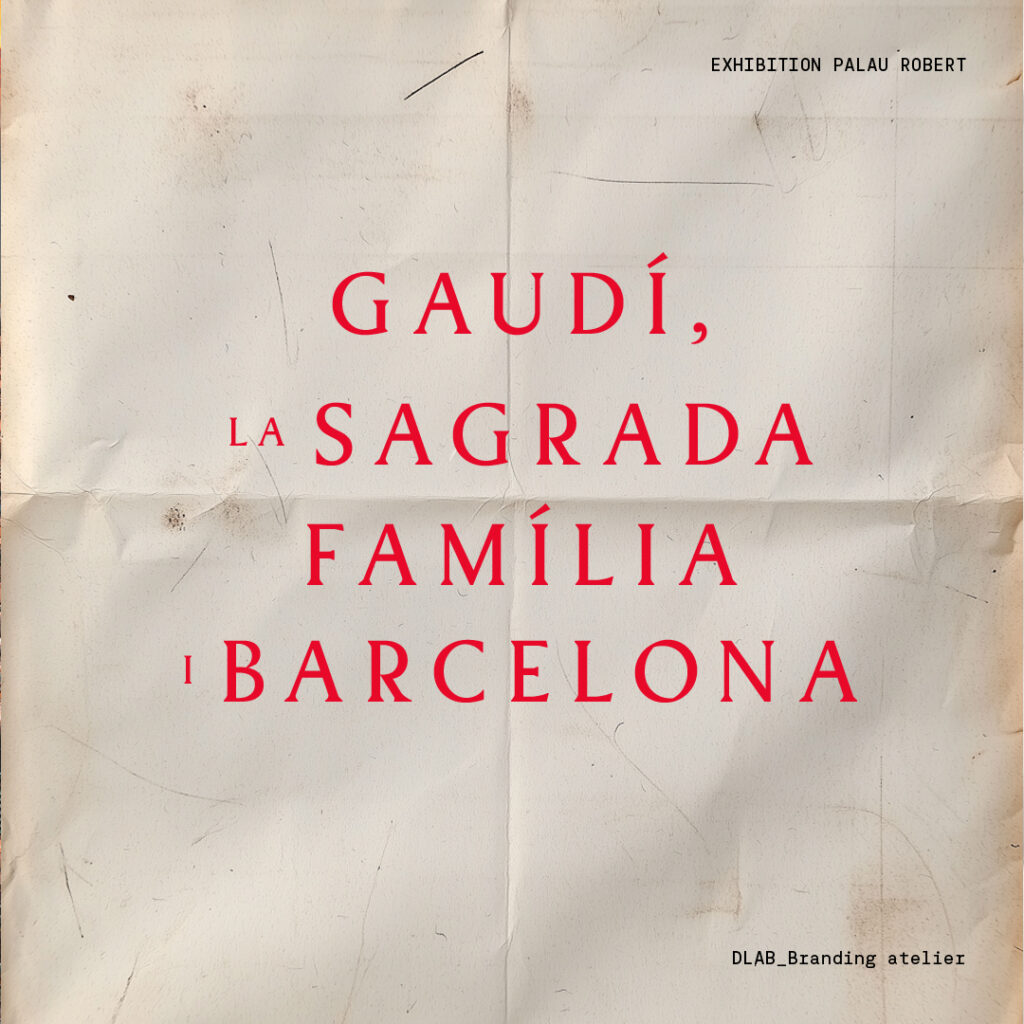
The result was also the title of the exhibition:
The Sagrada Família i Barcelona.
144 anys de camí compartit.
Materialization of the strategy
The exhibition had to tell that relationship from its own structure.
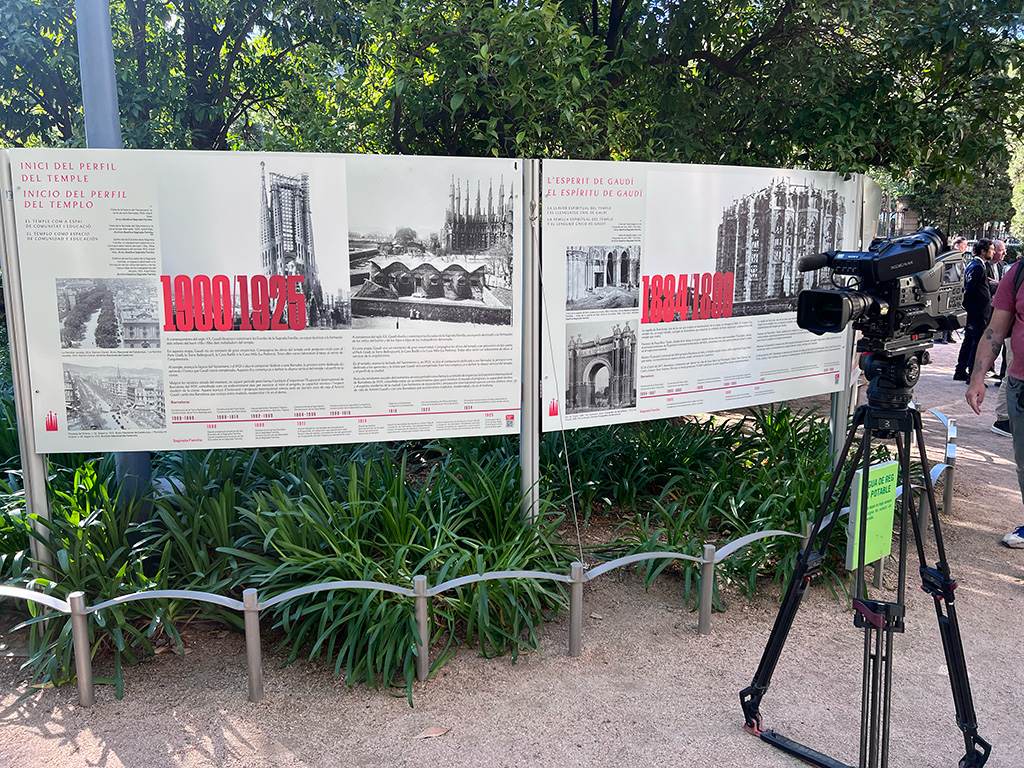
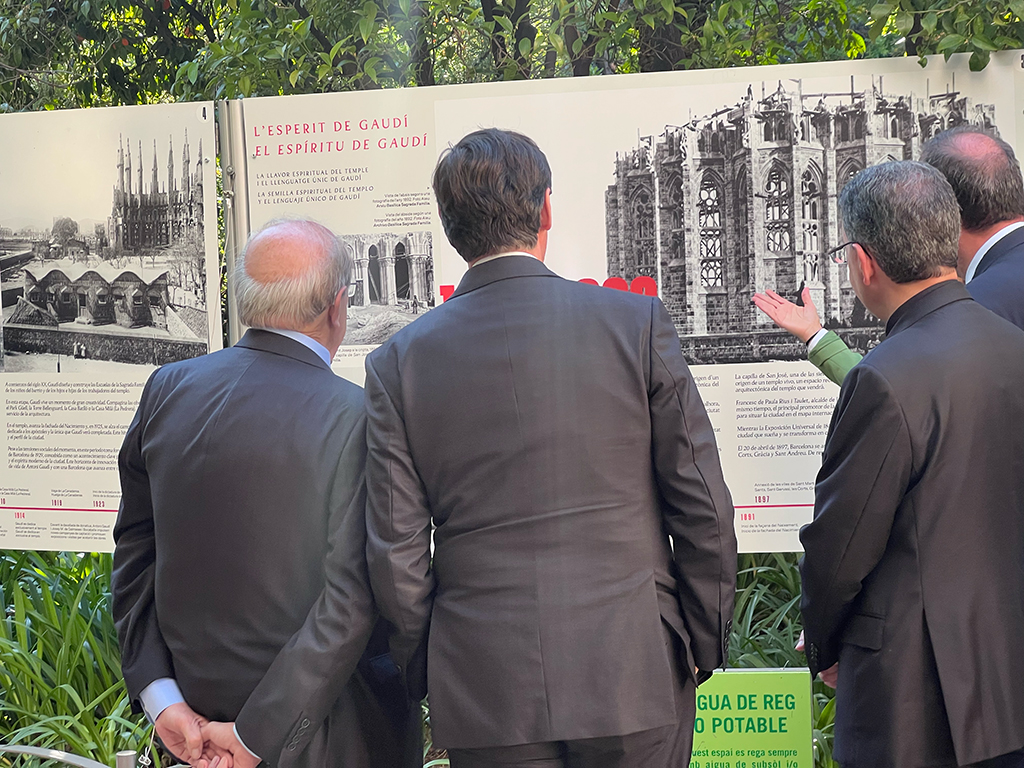
The route was articulated through 14 panels of 2 × 1.5 meters, each one dedicated to a period of that shared path.
On each panel, a large-format photograph showed the evolution of the Sagrada Família and its immediate surroundings.
Next to it, three smaller-format images shifted the gaze towards the city: events, transformations and scenes that were happening in Barcelona during that same period.
An image looked at the temple.
Three looked out over the city.
They all spoke of the same time.
Thus, the idea was not only explained in the texts.
It became the very structure of the exhibition.
Ceiling by panel, the visitor could simultaneously observe how the temple grew and how Barcelona shed its skin around it.
They were not two chronologies.
It was the same time seen from two places. It was the same time seen from two places.
Case learning
The initial commission was to create a photographic exhibition on the evolution of the Sagrada Família.
The research took us further.
For almost a century and a half, millions of people have seen the temple grow while the temple saw them build Barcelona.
The streets have changed.
The buildings.
Transport.
The way of living the city.
Barcelona has shed its skin time and time again.
And while all this was happening, the Sagrada Família also continued to transform.
After reviewing files, documents and hundreds of photographs, we understood that we were not only telling the evolution of a building.
We were telling the relationship between a temple and the city that has grown with it.
Sometimes a commission seems to ask for images.
But before looking for them, we must know what we are trying to see.
Related Services
- Research and strategic diagnosis
- Curating and curating
- Narrative and visual identity
- Creative direction
- Exhibition design
- Art direction
- Editorial design